Bye, Retraction. See you next summer.
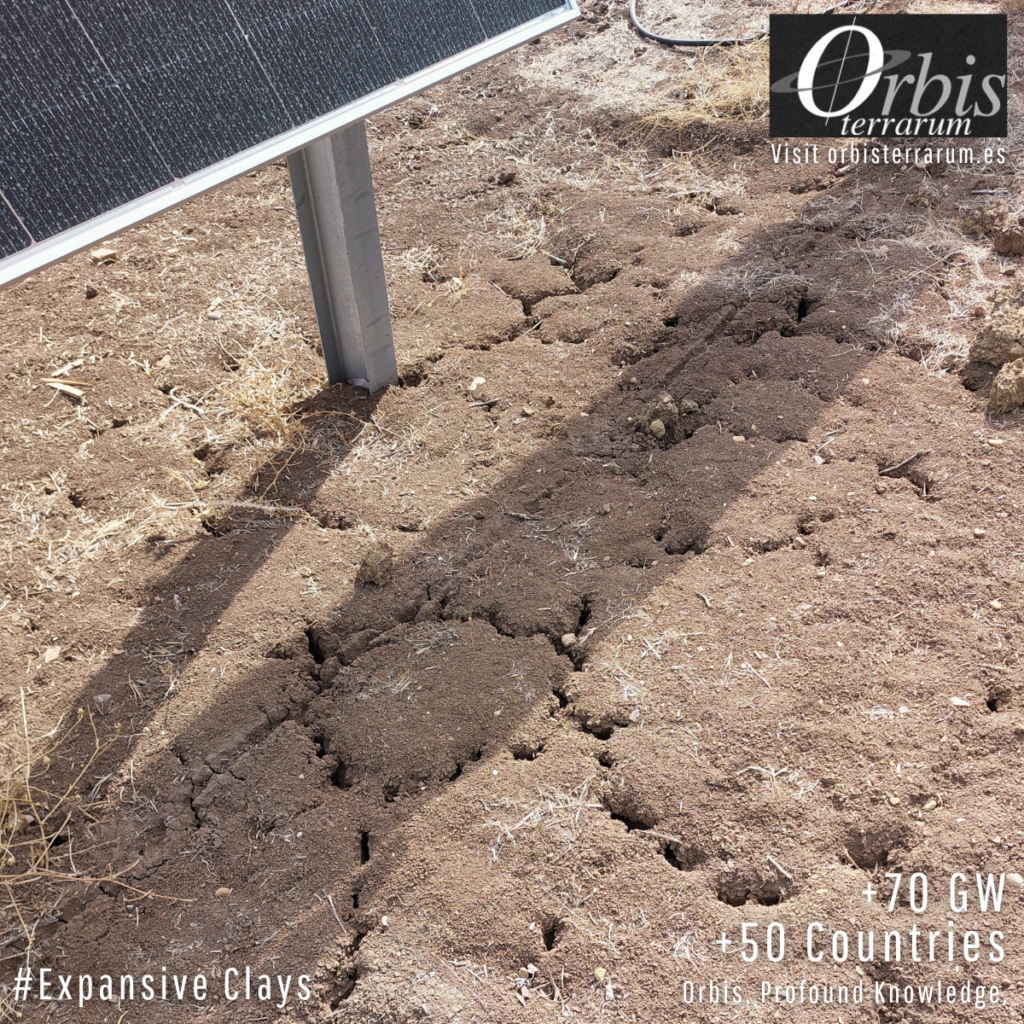
@OrbisTerrarum underscores a frequently underestimated geotechnical phenomenon impacting photovoltaic assets on clay soils: the seasonal cracking–swelling cycle and its long-term structural implications.
With the arrival of rainfall, it may seem that retraction issues “disappear”. However, in clayey terrains, the opposite occurs.
During wet periods, clay absorbs moisture and expands, generating lateral and vertical pressures that can impact foundations and affect structural alignment.
As temperatures rise and the soil gets drier, it shrinks and cracks, increasing fissure depth year after year and reducing bearing capacity if not properly addressed.
To anticipate and mitigate these effects, it is essential to integrate at early project stages:
- Targeted geotechnical studies to identify expansive soils and model their seasonal behaviour.
- Accurate geological-geotechnical cartography to zone the possible problems.
- Adapted Pull-Out Tests, assessing ground response while considering moisture–dry cycles.
- Hydrological studies to analyse rainfall infiltration and surface runoff, enabling the design of drainage solutions that prevent localised saturation and reduce foundation impact.
This integrated approach allows for the selection of suitable foundation designs, minimises in-operation pathologies, and ensures the long-term durability of the photovoltaic asset.
#OrbisTerrarum #ProfoundKnowledge #GeotechnicalEngineering #HydrologicalStudies #ExpansiveClays #PullOutTest #GroundEngineering #PV #Renewables #SoilBehaviour

