Spain has launched its first synchronous compensators projects.
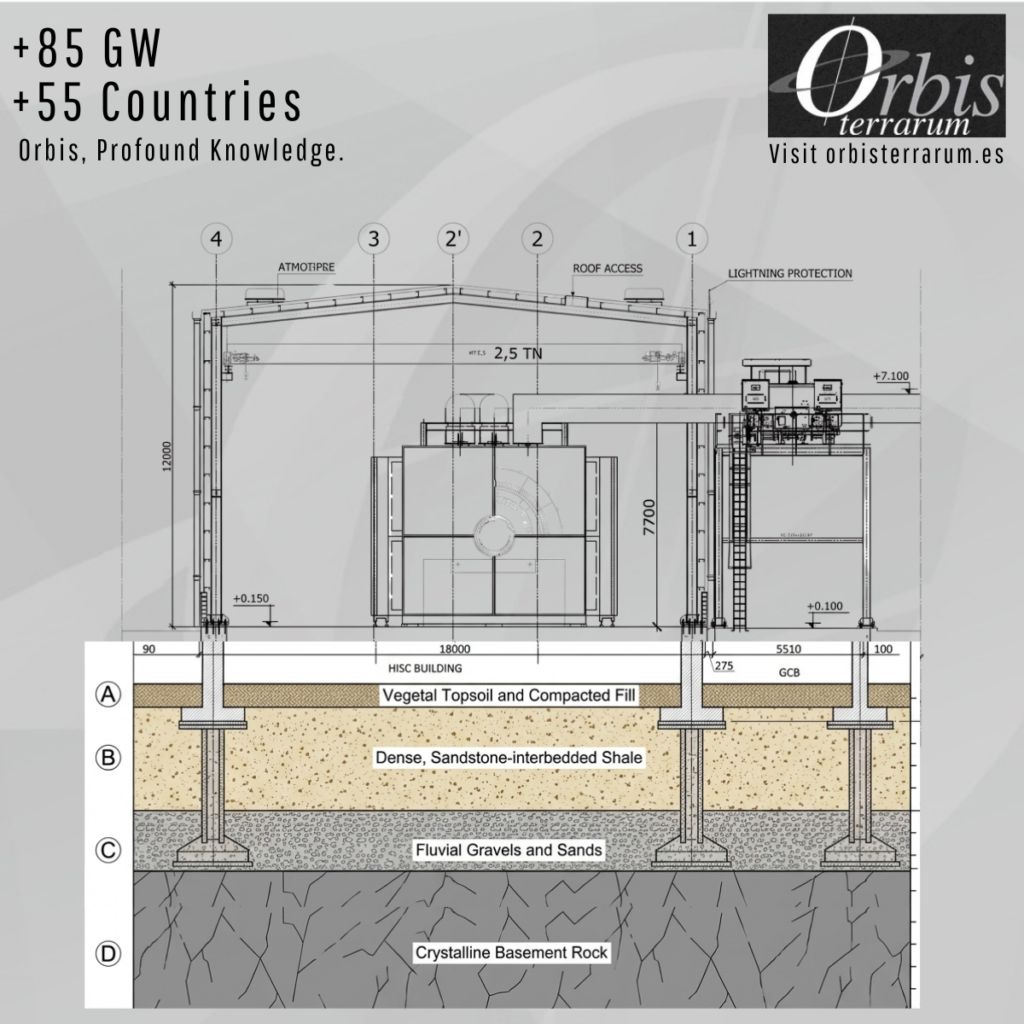
These systems are critical for grid stability, but they come with a challenge: continuous vibrations over long periods of time. Many geotechnical studies drill a few boreholes, derive static parameters, and deliver a report. That works for a building. Not for a machine that vibrates continuously.
That’s why Orbis integrates geophysical methods to characterize the soil’s dynamic behaviour: wave velocities, dynamic moduli, and response to vibratory loads.
For UK & Ireland´s synchronous compensators projects, Orbis Terrarum builds a complete geological geotechnical subsurface model – not isolated data points. Because between boreholes, the ground changes: soft layers appear; stiffness varies, and some areas can amplify vibration.
The result: a clear basis to design the foundation by zone, anticipate where differential settlements may occur, and understand how vibration waves propagate through the ground.
We’ve done this in the UK and Ireland. Now that it’s arriving in Spain, we know the challenges ahead and how to address them.
info@orbisterrarum.es

